Developmental and Learning Sciences- Ph.D.
The Developmental and Learning Sciences area of concentration focuses on an interdisciplinary approach to understanding development and learning that includes theory and research from the fields of developmental psychology, cognitive science, neuroscience, and education. Students may choose courses in life span human development, cognitive development, and early childhood education. The courses in this area of study provide graduates with a broad-based foundation for understanding human development specific to phases of the human life span and a deeper appreciation of the diversity and similarity of human behaviors. Course work in the Developmental and Learning Sciences offers an overall theoretical and practical examination of age-related and individual differences that emerge in factors affecting physical, behavioral, social-emotional, cross-cultural, biological, cognitive, and personality development and learning. The influences of family, community, and social environments are also examined.
Examples of research opportunities for students available through the Developmental and Learning Sciences Research Lab and The Center for Education, Research, and Sustainability include working with faculty on projects investigating math cognition and learning difficulties, motivation, nature play and science learning, and early childhood education.
Work in the discipline of Developmental and Learning Sciences is geared toward improving developmental and learning for individuals. Graduates are prepared to assume a myriad of responsibilities but, most commonly, work as faculty members in higher education teaching or administrative settings, and in community service agencies, or in positions where they conduct research related to development and learning.
All course work decisions are made in concert between the student, his or her mentor, and the committee and will be individualized depending on previous graduate course work, areas of interest, and professional goals. The list below represents the courses that are currently available in the Developmental and Learning Sciences area of concentration.
Program Objectives
By graduation, you will have:
- Completed courses that provide critical training in the intellectual pursuit of advanced knowledge in educational, social, and behavioral sciences
- Participated in research apprenticeships with Graduate Faculty in the School of Education
- Faculty mentoring that allows you to author and/or co-author publications and presentations at national and international conferences
- Preparation for academic and administrative positions in educational institutions and social service agencies

Mary Boat
Assoc Professor, CECH Special Education
615B Teachers College

Rhonda Douglas Brown
Associate Director, School of Education, CECH Educational Studies
2150W EDWARDS 1 Edwards Center
Dr. Brown co-founded and serves as Co-Director of the Developmental & Learning Sciences Research Laboratory, which strives to generate research, educational experiences, and applications using an emergent, interdisciplinary approach from the fields of developmental psychology, cognitive science, neuroscience, and education.
Dr. Brown also serves as Co-Editor of the peer-reviewed journal Children, Youth and Environments. The Children, Youth and Environments network disseminates knowledge and stimulates discussion to support inclusive, sustainable, and healthy environments for children and youth everywhere.
Dr. Brown conducts research examining neural correlates and cognitive mechanisms of mathematical and memory development using fMRI and behavioral measures with the aim of improving educational interventions for children with learning difficulties. Dr. Brown has also conducted research sponsored by the National Science Foundation (Co-PI, Award # 1516191) examining how intentionally designed PlayScapes serve as environments for promoting children's science, technology, engineering, and mathematics (STEM) learning and executive function.
Dr. Brown advises students in the Educational Studies Ph.D. program in the Developmental & Learning Sciences area of concentration. From 2020-2024, she will serve as a co-advisor to doctoral scholars participating in the National Early Childhood Intervention Doctoral Consortium (ECiDC), which is funded to prepare doctoral scholars across 10 universities in early childhood special education (birth-5) and related services (occupational therapy, social work and speech and language pathology) for positions as future faculty members who have expertise with infants and young children with high intensity needs and their families (U.S. OSEP, H325H190004, Project Director: Mary Beth Bruder).
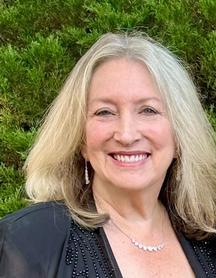
Victoria Carr
Professor, School of Education, Early Childhood Education / Developmental & Learning Sciences; Affiliate Faculty, School of Environment & Sustainability, CECH Early Childhood Education
2150H EDWARDS 1 Edwards Center
Dr. Carr is co-editor-in-chief for Children, Youth and Environments, a journal that publishes research articles and reports from the field on environments where children and youth live, learn, work, and play. She serves on the editorial review board for the Journal of Research in Childhood Education, as a consulting editor for the International Journal of Early Childhood Environmental Education, and is an active member of the Transnational Dialogues on Early Childhood Education for Sustainability (ECEfS).
Dr. Carr conducts research and publishes books and articles on ECEfS, children and nature, teacher efficacy, and challenging behaviors in early childhood settings. She has generated over $27M in funding related to programming and research in early childhood education during her UC career. The National Science Foundation supported her research on informal science learning in playscapes (2011-2019), and she has had multiple projects funded by the PNC Foundation. She assists with landscape design, provides programming consultation, and conducts research on nature-focused playgrounds, including the Cincinnati Nature Center Playscape (2011), the Arlitt Playscape (2012), a community-built school playground in Papua New Guinea (2015), and several Head Start and child care center playscapes (2016-present).
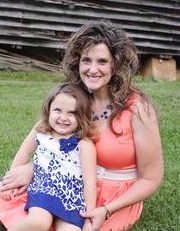
Tina Stanton-Chapman
Professor of Early Childhood Education and Human Development, CECH Elementary Education
2150X EDWARDS 1 Edwards Center